Barbering – Still in Style
Behind the Scenes with Sidney Kasoff Gray
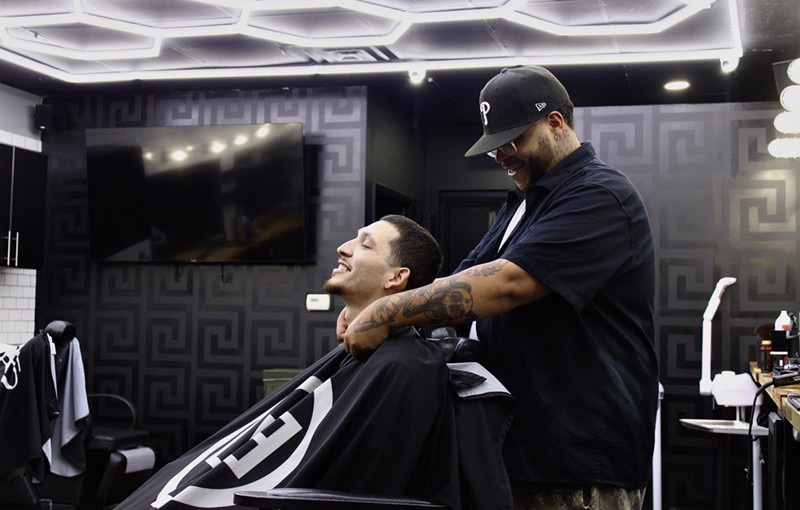
Fifty or 60 years ago, walk down any main street in America, and it wouldn’t be uncommon to spot the swirling motion of a red, white and blue striped barber pole. The trusty barber shop could have easily been described as a staple in American society. Fast forward decades. Spas and hair salons have expanded exponentially. They are just about everywhere. And though some may think of the old-fashioned, classic barber shop as pure nostalgia, it appears that they haven’t gone out of style.
Meet Sidney Kasoff Gray, a barber at Levelz Barbershop in Cherry Hill, New Jersey. He’s been working at Levelz (a shop with five locations; four in South Jersey, one in Philadelphia) since 2019 and has never looked back. “The barbershop is making a comeback,” said the 26-year-old lifelong Collingswood resident.
Gray shared that becoming a barber was never in his long-range plan. In fact, while studying illustration at the University of the Arts in Philadelphia back in 2018, he was fairly certain that would be his path. But life has a way of intervening.
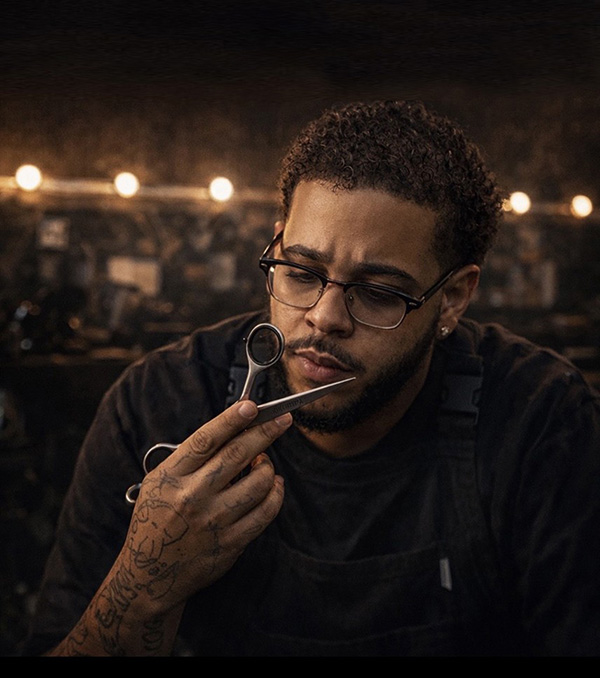
Gray said that he first picked up a pair of $15 clippers at about the same time that he was “falling out of love” with art school. “I needed extra money and a friend needed a haircut,” recalled Gray. Suffice it to say that things kind of took off from there. His friend was thrilled with the result. And Gray felt pretty good about the finished product. Barbering, he has learned, is really another type of art form. Though these days, instead of the old-fashioned barbering school, training is offered by cosmetology institutes. Students can choose their area of specialty, including barbering.
After that pivotal day of discovering a newfound talent, Gray began viewing lots of barbering videos (probably thousands), watching barbers and studying the variety of techniques of those seasoned in the craft. This led to further precision of his skills and the ability to hone the craft. That passion soon led the self-taught barber to enroll at PB Cosmetology Education Center in Gloucester City in 2020. He became licensed in 2021. Attending this training at the height of COVID had its share of challenges, Gray explained, and everyone was obviously in masks. But to Gray, the education was well worth it.
“I love my job,” said Gray, elaborating that the skills of a barber are very different than that of a hairdresser. Barbers, he said, focus solely on cutting hair in a man’s style, though there are a few women who prefer a very short cut that seek out barbers. It’s also not uncommon to offer a facial shave if a client requests the service. Barbers use straight razors for some clients, he added, which are sharpened with a sanding stone. Hairdressers, on the other hand, do highlights, updos, perms, cuts and pin curls, to mention a few. And typically, hairdressers prefer cutting wet hair, whereas barbers start with it dry. “I like to start with a clean canvas,” said Gray, meaning no product.
Tools of the Trade
“Clippers and shears are used for different things,” said Gray, who utilizes both on a regular basis to achieve his goals. “Clippers are mainly used for shorter styles and fading, like skin fades on the sides and back of the head or buzz cuts. Shears are used more for taking length off longer hair and shaping styles like slick backs, combovers and other longer looks. We also use thinning shears to take some bulk out of thicker hair.”
After a haircut, Gray often uses a soft barber brush to remove loose hair from the client’s neck, face and clothing. “Depending on the client and service, I may also use a little powder or aftershave product to help the skin feel clean and comfortable,” he said.
Gray sees about 14 or 15 clients a day, with ages from about 3 through 80-something. But no matter the age or the texture of hair, he always aims to do the best he can to please every client. One appointment may be a high school freshman, the next a man in his 80s. “I always try to give every cut as if it were the client’s wedding day,” said Gray.
“I love the feeling of giving people confidence and being one of the few on earth to do that,” he continued. “For me, it’s never been about the money.” Gray is all about quality rather than quantity and finds it very gratifying when a client gets out of his chair with renewed confidence.
Documentary in Process
Gray explained that working in the industry has yielded some unexpected life lessons and observations on the mindset of barbers. After seven years of cutting hair, he wants to share some insights and behind the scenes glimpses on the human aspect of the job. So much so that he is in the process of creating a documentary series entitled “Deep Cut – The Chair Built Me.” The series, which he plans to post on social media (Instagram, Facebook and YouTube), will spotlight interviews with barbers who have been in the profession for at least 10 or more years. “It will feature conversations with seasoned barbers about the side of the craft you don’t typically hear about,” said Gray, adding that many clients confide in him about their personal struggles. Yet a barber, he underscored, is not a mental health professional. But listening with compassion is kind of expected from those who sit in his chair.
On a recent Instagram post, Gray described the premise behind the documentary: “Beyond the chair, beyond the shop, beyond being just a barber, we all remain human beings, but rarely in this industry do we get to voice our struggles, our doubt, our anguish and the lessons that come attached to the craft.”
Barbers, he said, often listen to the personal struggles and details of clients’ lives. It kind of comes with the territory. Clients frequently talk about their families, milestones, special moments in time. And when clients are regulars, which is commonplace in the industry – whether weekly, biweekly, monthly or every six weeks – their barber often gets to know a lot about their lives.
“Some guys come in, and they may be feeling depressed,” he said. “They confide in me. Sometimes, I can connect but it can be stressful. Some clients may ask for advice, and I don’t have the answers. I’m not a licensed psychologist.” It is this nuanced aspect of the industry that Gray aspires to share with the world.
Working an 11-or 12-hour day from Tuesday through Saturday, Gray is on his feet most of the day. He feels that it’s part of his job to listen, to be a welcoming, cheerful presence, to be happy. “So even if I’m struggling, I have to put on a happy face,” he said.
Gray looks forward to sharing the spotlights of an array of seasoned barbers, which he plans to release one at a time.
At the end of the day, Gray finds it extremely rewarding when clients get out of his chair feeling refreshed, renewed and more self-confident. The finishing touches matter as does the “wow” factor. Gray wants each client to “feel like a million bucks” after their haircut.